AsherSupport · supporting infrastructure
THE SUPPORT LAYER.
Knowledge · Support · Tickets · Scheduling · Customer experience. Not a step in the stack — the service infrastructure that sits underneath every product in the ecosystem.
Where it sits
Underneath, not on top
Data, intelligence, execution and economy are layers you move through. Support is not: it runs beneath all of them, which is why it is drawn as infrastructure rather than as a fifth step. It is also a product in its own right — the same help desk is available to anyone who needs one.
Five pillars
What the support layer covers
Knowledge
A knowledge base, so the answer someone needs at 2am is already written down instead of waiting on a human being awake.
Support
A real multi-tenant help desk: separate tenants, separate brands, separate products, one piece of infrastructure underneath.
Tickets
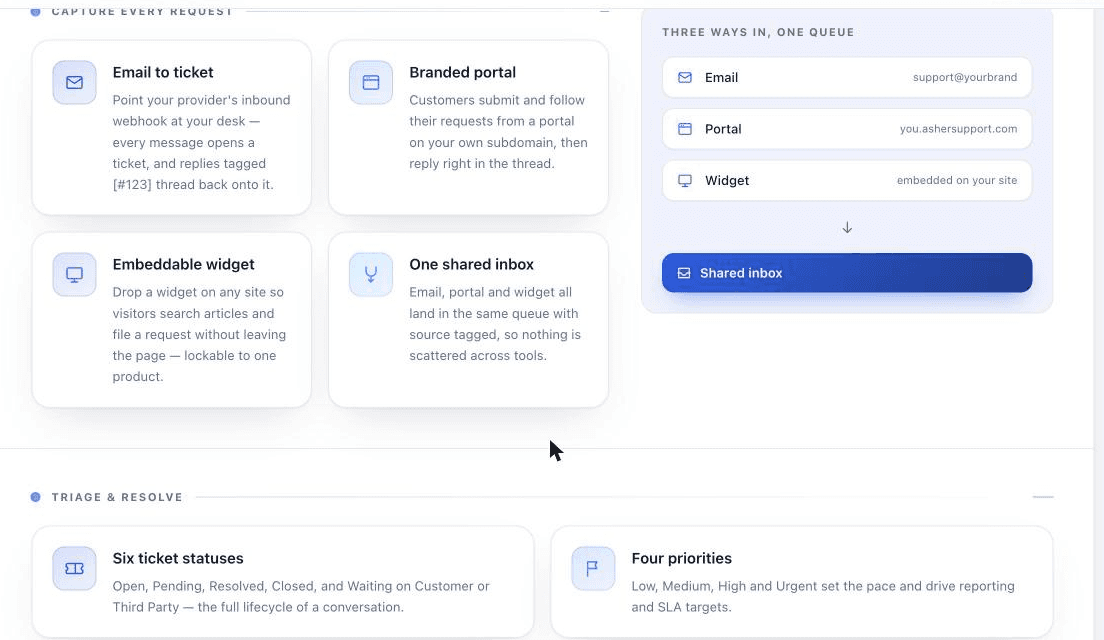
Email becomes a ticket on arrival, and the ticket is the thread of record. SLA policies set what counts as late, so it is a measurement rather than a feeling.
Scheduling
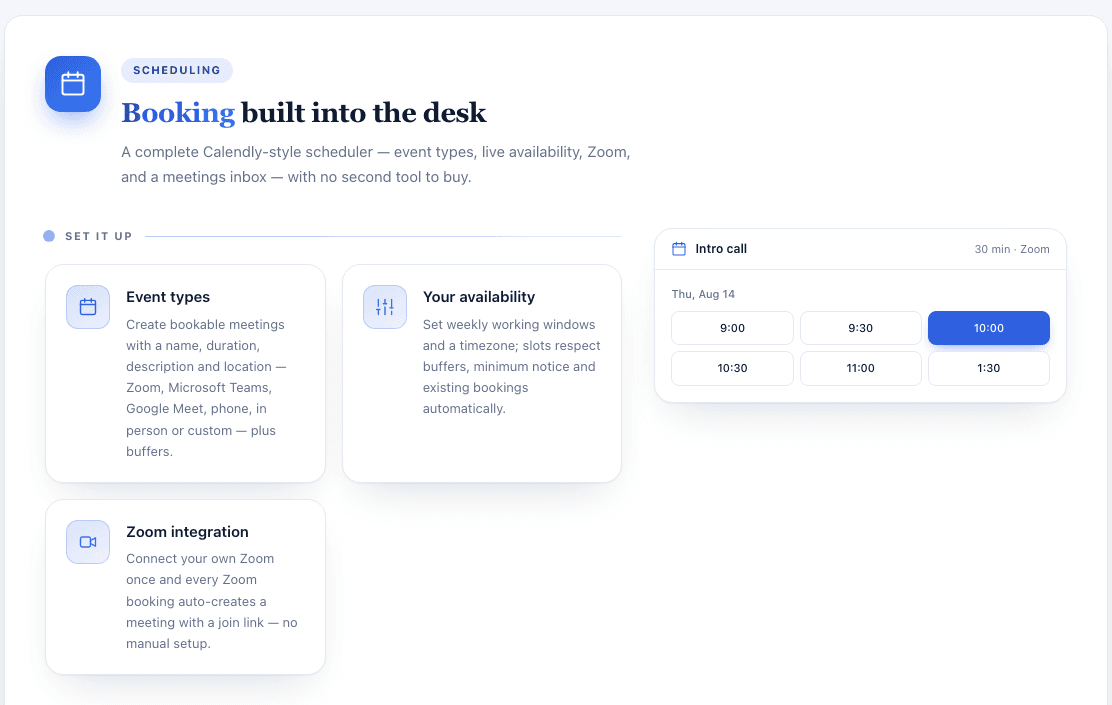
Booking backed by real calendar integrations — Google, Microsoft and Zoom via OAuth — so a scheduled call is on the calendar that the person actually reads.
Customer experience
A customer portal for the people you serve, and an embeddable widget so help lives on your own pages rather than on a detour.
What is actually built
The specifics, without the brochure
Every line here is something that exists in the product today.
- Multi-tenant
- One deployment serving distinct tenants, with multi-brand products, rather than a single-brand tool wearing different logos.
- Email to ticket
- Inbound email is ingested and becomes a ticket, so nothing depends on a person remembering to copy it into a tracker.
- Knowledge base
- Articles customers can read themselves, alongside the ticket queue rather than bolted on beside it.
- Customer portal
- A portal where customers can see their own requests instead of asking for a status update.
- Embeddable widget
- Support surfaced inside your own product, on your own pages.
- SLA policies
- Response and resolution targets defined per policy, so performance is measured against something written down.
- Automation on creation
- Rules can run when a ticket is created — routing and triage at the front door. Creation is the trigger that exists; this is not a general workflow engine.
- Scheduling integrations
- Google, Microsoft and Zoom, through real OAuth connections to the customer’s own accounts.
Plans
Published pricing
AsherSupport publishes four tiers, priced per agent.
Free
$0 / agent / month
Starter
$9 / agent / month
Growth
$19 / agent / month
Scale
$49 / agent / month
Prices as published by AsherSupport. See ashersupport.com for current plan details.
Keep reading
The rest of the ecosystem
- DATA
AsherCore
Market data, news and economic events normalized across crypto, equities and FX into one API the rest of the ecosystem reads from.
- Market data
- Streaming
- Asher Wire
- API
- INTELLIGENCE
AsherLabs
The intelligent trading environment: chart, analyze, build, automate, publish and monetize — charting, indicators, strategies, AI and creator tools in one workflow.
- Charting
- Indicators
- Strategies
- Creator tools
- EXECUTION
Execution
Connected, non-custodial execution from inside the AsherLabs workflow. Your funds stay in your own account, and the session key that signs orders cannot withdraw.
- Non-custodial
- You sign
- Hyperliquid
- ECONOMY
ASHER
The utility and coordination layer intended to connect traders, creators, strategies and the broader ecosystem. Nothing is deployed yet.
- Not deployed
- Genesis forthcoming